Dzūkija National Park
Dzūkija National Park is Lithuania’s largest forested area in the south: pine woods, sand dunes, streams and quiet villages. You can walk a long time without meeting anyone, and in spring and autumn the villages smell of mushrooms and berries.
Updated
Show Dzūkija National Park on the map
Photo: Wojsyl · CC BY-SA 3.0
What to see
Liškiava and the Nemunas valley
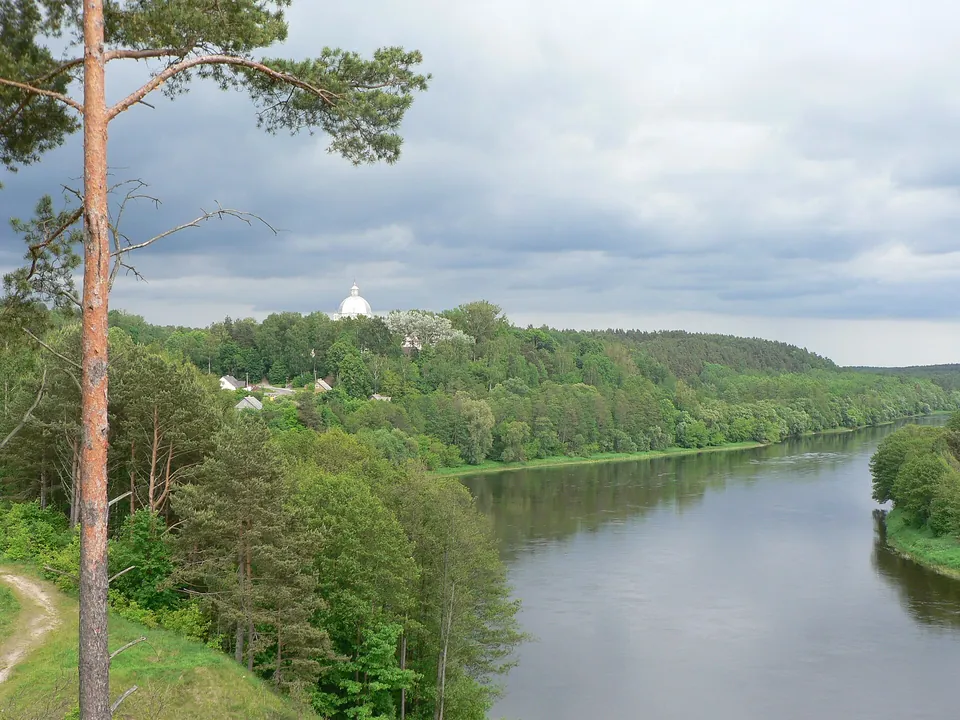
The Liškiava hillfort and the lovely Nemunas valley are among the park’s main views. A church is visible high above the river, with forest all around. It is a good place for walking and photography.
Liškiava, Varėnos r.
Photo: Wojsyl · CC BY-SA 3.0
Open in Google Maps, Liškiava and the Nemunas valley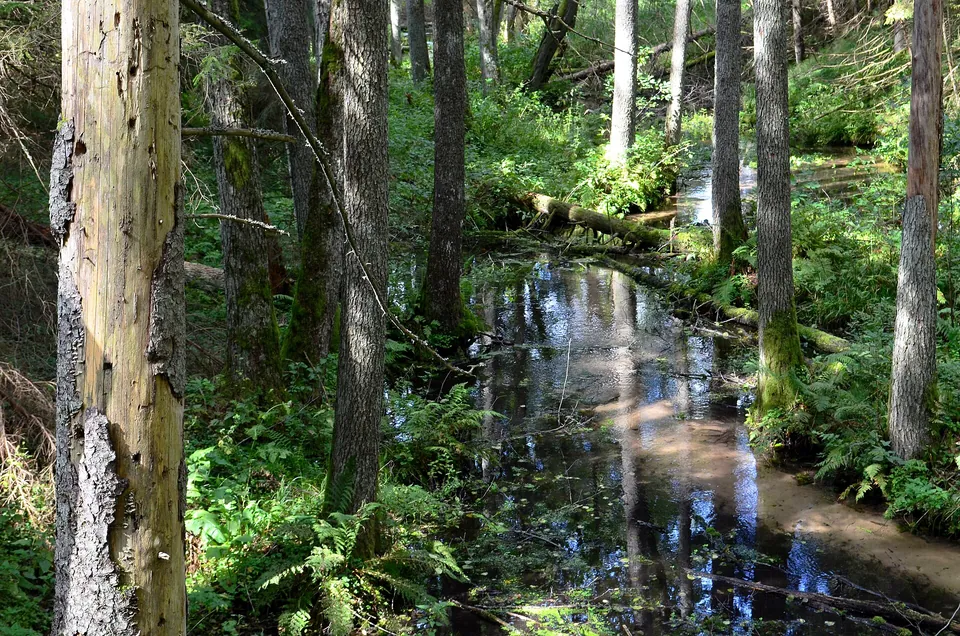
Išrūginis stream
A clear, dark-watered stream flows through a mixed pine and deciduous forest. Birds can be heard from the path, and reflections on the water create a special mood. It suits a quiet walk.
Išrūginio upelis, Zervynų apylinkė, Varėnos r.
Photo: Hugo.arg · Public domain
Open in Google Maps, Išrūginis stream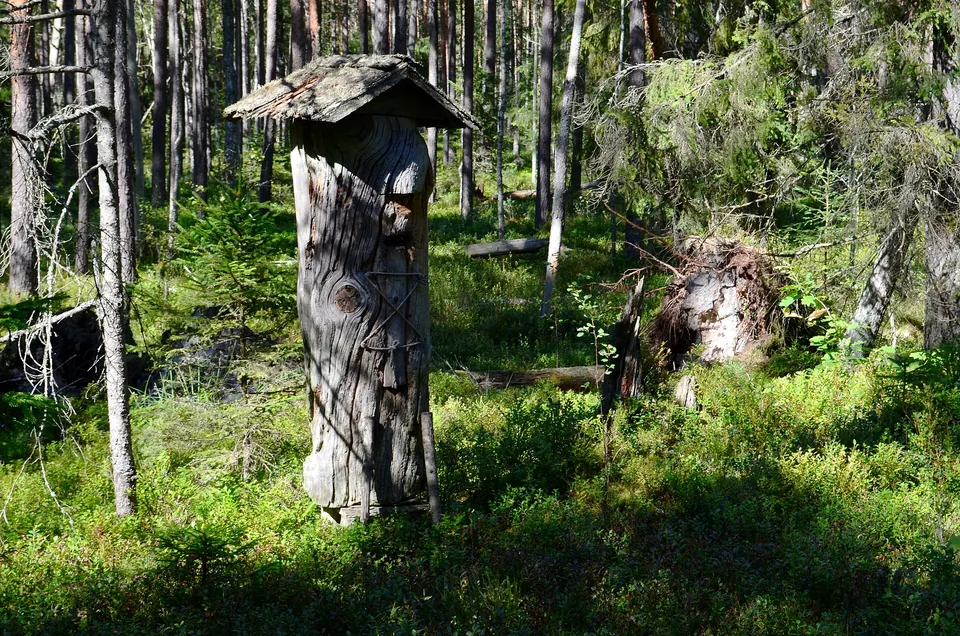
Tree-trunk beekeeping trail
The trail near Musteika introduces tree-trunk beekeeping, the old tradition of gathering honey. Old carved hive-trunks stand in the forest. The trail is well marked and short.
Drevinės bitininkystės pažintinis takas, Musteika, Varėnos r.
Photo: Hugo.arg · Public domain
Open in Google Maps, Tree-trunk beekeeping trail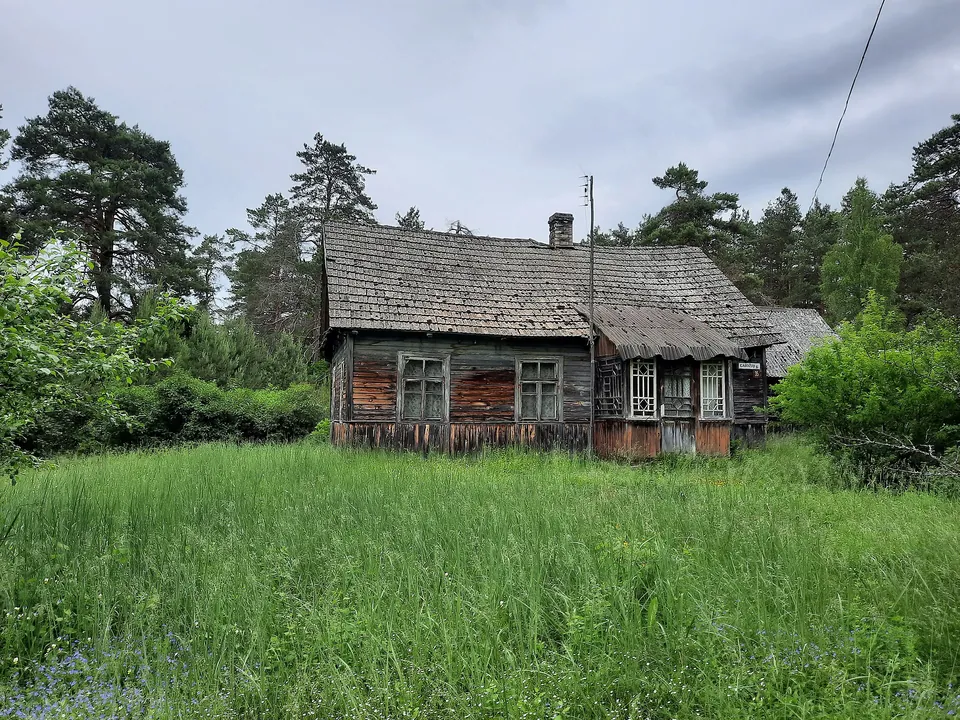
Marcinkonys
Marcinkonys is the park’s administrative centre. The village keeps traditional Dzūkian buildings and a quiet village atmosphere. A visitor centre and the starting points of walking and cycling routes are here.
Marcinkonys, Varėnos r.
Photo: user:CD · CC BY-SA 4.0
Open in Google Maps, MarcinkonysPlan your visit
How much time to plan
Give the park two days: one for Liškiava and Merkinė, another for Marcinkonys, Zervynos and the Musteika trails. With one day, choose one of these directions.
Getting there
The park centre Marcinkonys is about 110 km from Vilnius and about 139 km from Kaunas by car (OSRM, checked 28 November 2026). Public transport goes to Varėna, but beyond that you need local transport, so a car or bicycle is easiest.
When to go
Spring and autumn are the time for mushrooms and berries, summer is warmest, and winter is very quiet. In bogs and forests visit only along marked trails.
Practical tips
Entry to the park is free, but some activities (paddling, fishing, visiting the Čepkeliai Reserve) need permits. Check the park website before you go.
Day trips
Druskininkai is close (about half an hour away), as are the Merkinė and Liškiava hillforts. You can also combine the visit with Alytus.
Museums
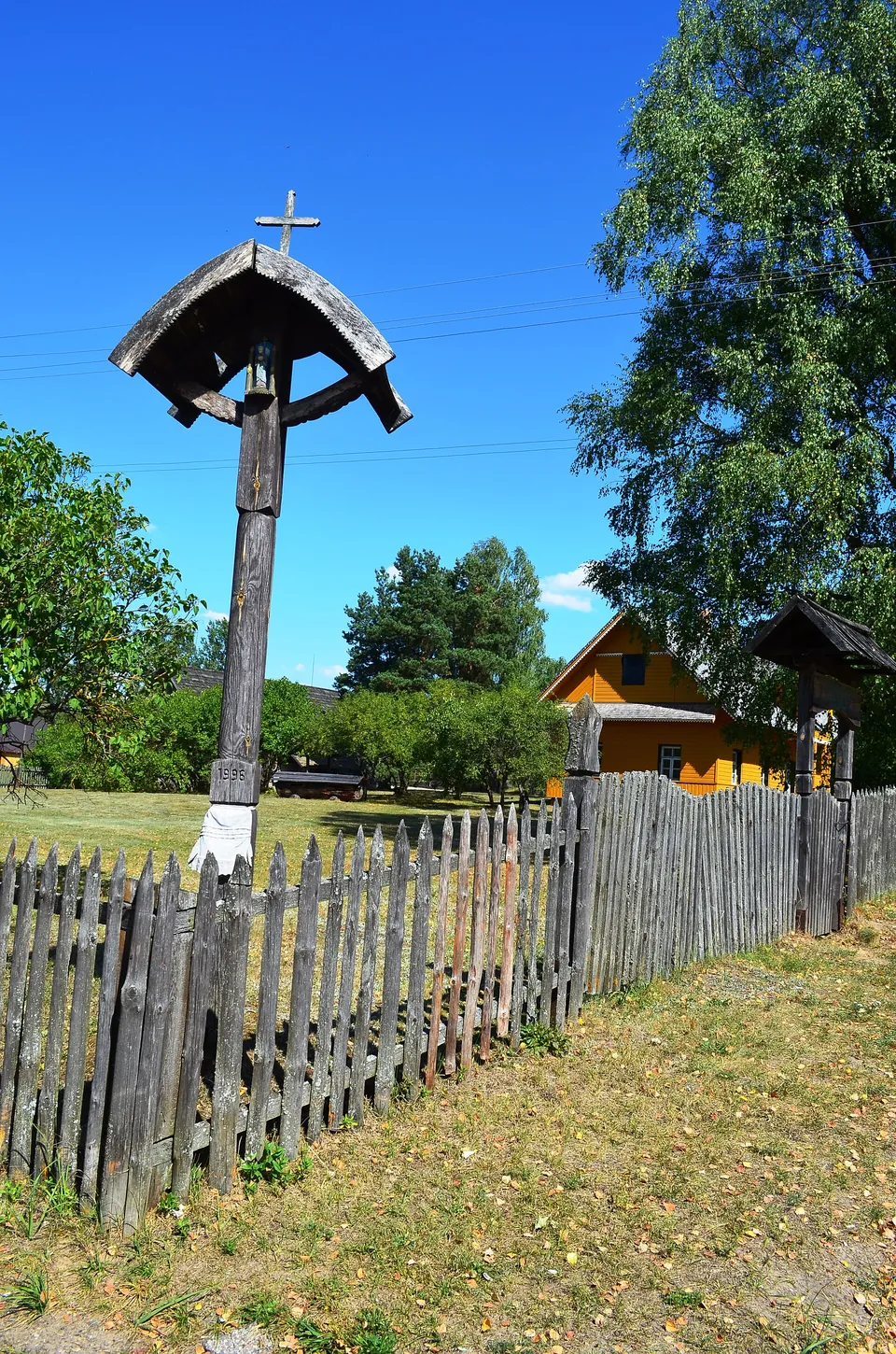
Dzūkija Ethnographic Museum
The museum in Marcinkonys introduces village life and traditions in Dzūkija. It helps you understand how people lived in a forest region. Check opening hours and prices on the park’s website.
Marcinkonys, Varėnos r.
Photo: Šarūnas Šimkus · Public domain
Official website Open in Google Maps, Dzūkija Ethnographic MuseumA travel company can place a labeled partner route here. Advertise with us
Map
The map loads from OpenStreetMap only after you click. © OpenStreetMap